
Pillar 2: Tools
Workshops & Training
Listen to this chapter · 27 min, narrated by David Jenyns
You know that saying about it taking 21 days to form a habit? The one that gets quoted in every self-help book and motivational speech? Well, it’s not quite right. It originated with Dr Maxwell Maltz, a plastic surgeon who published a book called Psycho-Cybernetics in 1960. Dr Maltz observed that his patients took “about 21 days” to adjust to seeing their new faces after surgery, writing that “it usually requires a minimum of about 21 days for an old mental image to dissolve and a new one to jell.” Over time, this was simplified into the now-ubiquitous claim that “it takes 21 days to form a habit.”
But it’s not really supported by more modern research. A 2009 study from University College London tracked 96 people forming new habits and found it actually takes closer to 66 days for a behaviour to become automatic. For some people, it was as fast as 18 days. For others, it took 254 days. While not a massive sample size, this peer-reviewed research provides a more evidence-based foundation than the arbitrary 21-day myth.
I share this because, as you know, your role as Systems Champion isn’t just about documenting processes. It’s about helping people form new habits. You’re asking team members to change how they work, to adopt new ways of doing things. And while we don’t need to wait 66 days to see results, we do need to support this change over a longer period of time.
This reality of habit formation highlights why one-off introductions to new systems rarely stick. Sending an email with links to new documentation or holding a single meeting to announce changes simply isn’t enough to rewire established work patterns. Systems adoption requires consistent reinforcement, practice opportunities and support throughout that critical 66-day window when new behaviours are still fragile and easily abandoned.
I remember working with a Systems Champion who had created beautifully detailed documentation for their customer service processes. The processes were perfect, the workflows were clear … but three months later, team members were still doing things their own way. Why? Because the Systems Champion never created a structured way to bring everyone along on the journey.
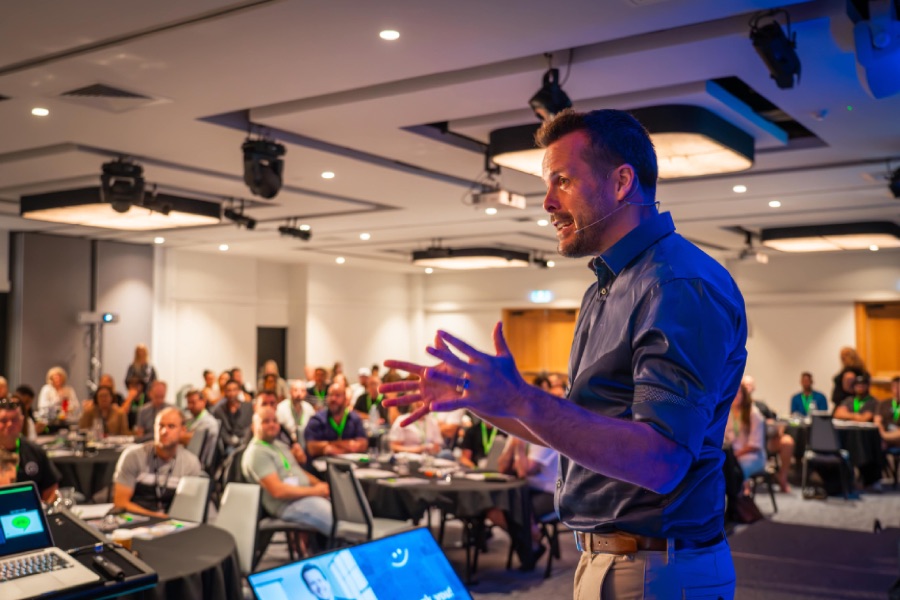
This is where workshops become your secret weapon. They give you a platform to announce new initiatives, engage your team and dramatically increase the likelihood of successful implementation. Whether you’re working with entire departments or smaller groups, these focused sessions create momentum for your systemisation efforts.
What exactly is a workshop?
Now, I get it … for some, the idea of running a workshop is a stretch outside your comfort zone. But let me put your mind at ease. A workshop can be as simple as a focused conversation about systems.
Sometimes you need a structured training session. Other times, a casual Q&A works better. You might use group discussions to solve specific challenges, quick demonstrations to show a new process or interactive exercises to practise using tools. The format should match what your team needs in that moment.
For your first one, make it easy on yourself and begin by asking for 15 minutes in your next team meeting to share a system win, or join a department huddle to demonstrate a new tool. Remember, your goal isn’t to become a professional trainer. It’s simply to get people thinking and talking about systems.
I remember a Systems Champion who started just by sharing a five-minute systems tip at the end of each weekly meeting. Those brief moments created more engagement than her previous attempts at formal training sessions. Why? Because she made systems approachable and relevant to everyone’s daily work.
I can’t understate how powerful workshops can be. There’s a well-known saying: “The only thing worse than training your employees and having them leave is not training them and having them stay.” And it’s true: the cost of mistakes, inefficiencies and double work far exceeds what it takes to train your team correctly.
Planning your workshop with AI
So where do you start? Here are some questions to consider:
- What specific outcome do you want?
- Who needs to be there?
- What’s the minimum time needed?
- What practical examples can you use?
- How can you make it interactive?
Just start brainstorming some ideas and putting together a rough plan. The first workshop you run could be about SYSTEMology and your Minimum Viable Systems (MVS). The second could be showcasing a system or two. The third could be teaching some of the tools you’re introducing. The fourth could be about some of your findings about AI.
Preparing a workshop outline is much easier than you think with a little help from AI. I gave the AI a little context about what I was working on, shared some resources and then asked:
“I’m a Systems Champion looking to introduce systemisation to my team. Can you create a detailed outline for a 30-minute workshop that’s simple and engaging? It should focus on explaining the benefits of systemisation, involving the team in identifying one process to systemise and setting clear next steps. Keep the language approachable and practical, with a balance of talking points and interactive activities. The goal is to inspire action and make systemisation feel achievable.”
Here’s what I got: a streamlined 30-minute workshop outline.
Now it’s your turn
Pretty cool, huh? And what a fantastic starting point. You can find more workshop templates and resources at SystemsChampion.com/resources.
Just remember to keep your workshops easy, fun and engaging. For better or worse, many people have baggage around the topic of systems and processes, and we need to challenge those false beliefs. We want to show them the SYSTEMology way of doing things!
And once you find your groove, running a workshop weekly would be a great target for you to set for yourself. Research shows that smaller, regular training sessions are far more effective for building and retaining new habits than infrequent, intensive ones. This approach, known as spaced repetition, not only improves long-term retention but also makes it easier for your team to integrate changes into their daily routines.